Skip to Content

Articles

A collection of articles on magnetic navigation for AGVs and AMRs

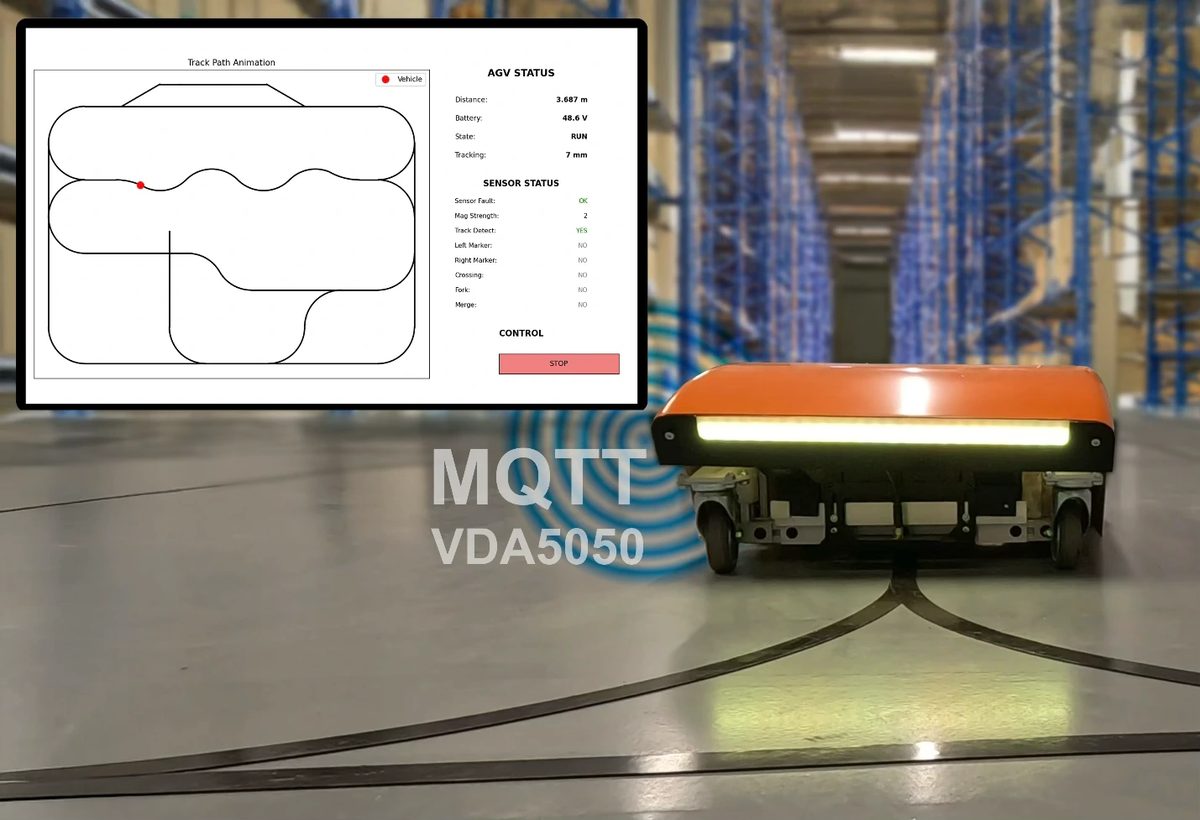
Orange Naviq demo AGV following magnetic tape in a warehouse, with the supervisory track-path display and MQTT / VDA5050 telemetry

Cost-Optimized Magnetic-Guided AGV Using the Naviq MTS160 Sensor and the EQSP32 IoT Controller

This application note describes the design and implementation of a minimal but full-featured magnetic-guided automated guided vehicle based on the Naviq MTS160 magnetic guide sensor and the EQSP32 IoT controller. The objective is to achieve reliable guidance and motion control suitable for industrial environments while minimizing system cost, hardware complexity, and integration effort. Magnetic navigation is particularly well suited and cost-advantageous for installations with stable, fixed paths.

Read Article
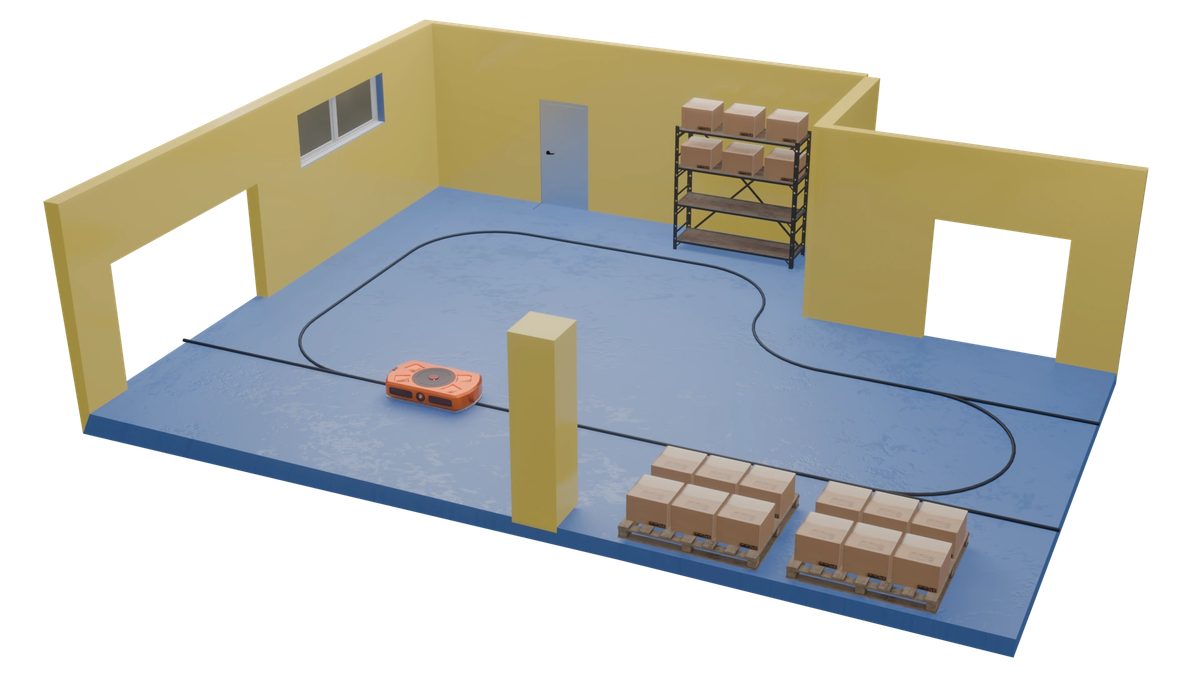
3D scene of an AGV following a magnetic track

Comparing Magnetic Navigation to Other Robot Guidance Techniques

In the rapidly evolving field of robotics, effective navigation systems are essential for optimizing efficiency and safety in various applications. Among the leading navigation techniques, magnetic guidance, laser guidance, and natural navigation stand out for their distinct advantages and limitations. This article delves into each of these methods, exploring how they function, their strengths and weaknesses, and the contexts in which they are most effectively employed. Understanding these techniques is essential for selecting the right navigation system to meet specific operational needs in industrial and commercial settings.

Read Article
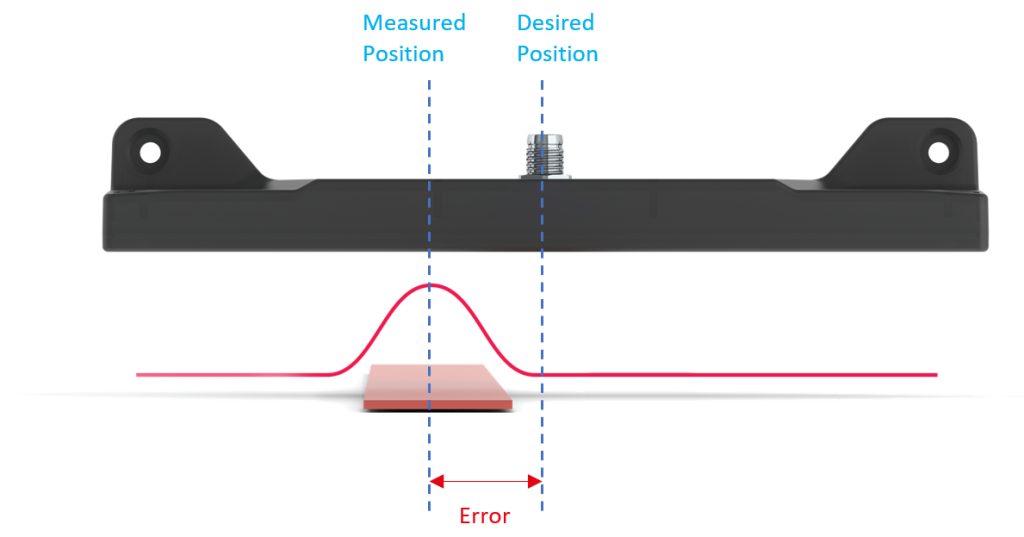
Render of an MTS160 magnetic guide sensor off center of a magnetic track, showing the position error

Predictive Steering Control using Angle Measurement

Traditional magnetic guide sensors only provide one-dimensional position information, indicating how much the robot deviates from the center of the path. The common method for steering correction in robotics is proportional control, where the steering adjustment is proportional to the error detected between the robot's measured position and the desired position. This article highlights the inherent challenges and limitations of relying solely on position information and explains how the addition of angle measurement overcomes these limitations, leading to more precise and effective steering control.

Read Article

Have Questions?

Our team is here to help you find the right magnetic navigation solution.

Contact Us